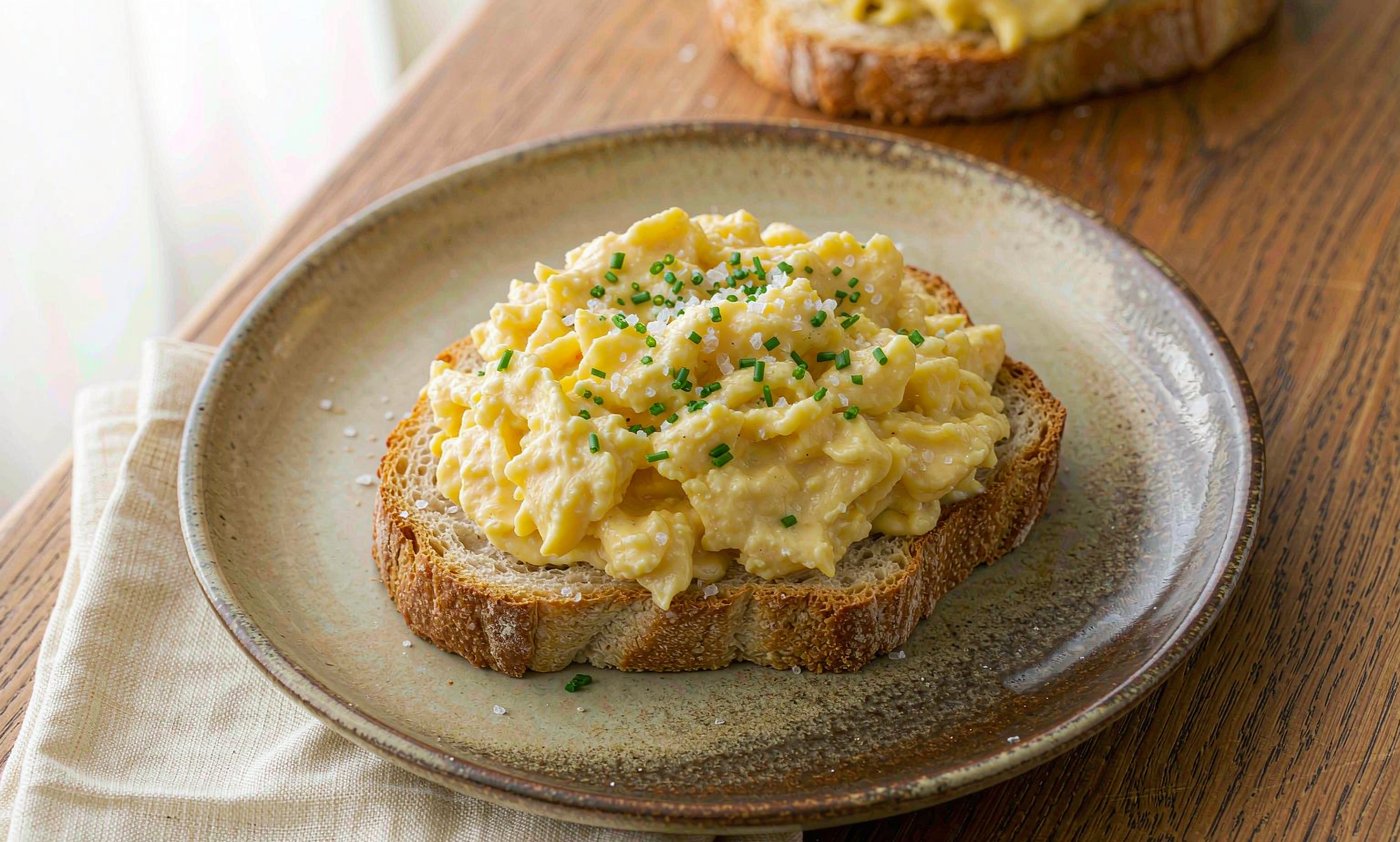
Soft Scrambled Eggs on Sourdough
Scrambled eggs are the cheapest way to learn a technique that improves everything else you cook: controlling heat by removing it rather than lowering it.
Slow, then off the heat, then slow again
Scrambled eggs are the cheapest way to learn a technique that improves everything else you cook: controlling heat by removing it rather than lowering it. Eggs set at about 70°C, and on a domestic hob the difference between that and 85°C is a matter of seconds. So we work in cycles.
The method is simple. Stir over medium-low heat until the base just begins to thicken, lift the pan off the heat and keep stirring, then put it back. Three or four cycles gives you small, glossy curds with no water weeping out of them. The whole thing takes four minutes, which is the correct amount of time to spend on eggs.
Sourdough is the right vehicle because it is sturdy enough to hold something wet without going soggy, and its acidity cuts through the butter. Toast it hard — pale toast is a wasted opportunity.
Ingredients
Instructions
Crack the eggs into a bowl with a pinch of salt and the crème fraîche. Whisk with a fork for about 20 seconds, until completely uniform — no streaks of white left. Do not whisk in air; you are mixing, not beating.
Toast the sourdough until it is properly dark at the edges and dry all the way through. Butter it and keep it warm.
Put a non-stick saucepan over medium-low heat with the butter. Let it melt and foam, but not colour.
Pour in the eggs and stir continuously with a silicone spatula, scraping the base and sides so nothing sets in a layer.
After about 90 seconds the mixture will start to thicken at the base. Lift the pan off the heat, keep stirring for 20 seconds, then return it.
Repeat this cycle three or four times, until the eggs are softly set but still glossy and slightly loose. Take the pan off the heat while they still look a shade underdone — residual heat finishes them.
Season with flaky salt and white pepper, fold through most of the chives, and pile onto the toast. Finish with the remaining chives and eat immediately.
Testing notes & substitutions
Room temperature eggs matter more than you think
Cold eggs lower the pan temperature by several degrees the moment they hit it, which is why the first minute of cold-egg scrambling does nothing at all. Take them out twenty minutes ahead.
A non-stick pan is genuinely the right tool
Stainless and cast iron hold too much heat and set the base in seconds. This is one of the very few places where non-stick produces a better result than anything else.
If they go too far
Take the pan off the heat and stir in an extra knob of cold butter. It will not undo the cooking, but it will bring back the gloss and loosen them enough to serve.
Questions we get a lot
Why did liquid come out of my eggs?
They were cooked too hot, which squeezes water out of the proteins. Lower the heat and work in shorter cycles — you cannot rush this and get the same texture.
Can I make them without cream?
Yes. A tablespoon of cold butter stirred in at the end does the same job. Milk makes them thinner and slightly watery.
Do I need white pepper?
It is not essential, but black pepper tastes noticeably harsher against eggs. If you have white pepper, this is the dish to use it in.
Dana Reyes
Dana has cooked professionally for eleven years and has been testing recipes for Hearth & Thyme since 2019. She writes about weeknight cooking, slow breads, and the small techniques that quietly change a dish. Every recipe she publishes is cooked at least twice, in an ordinary home oven.
Keep cooking
More brunch & breakfast
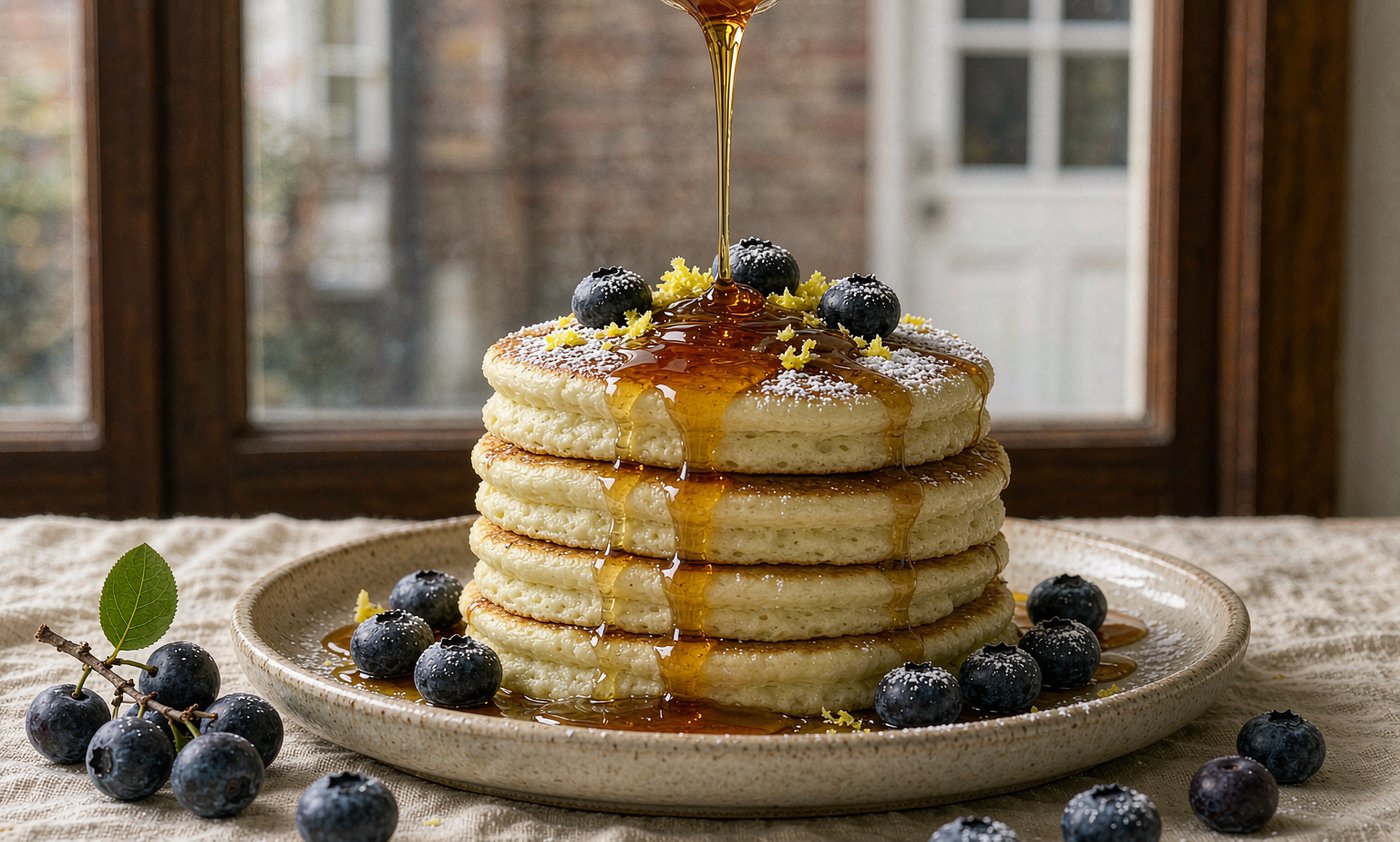
Lemon Ricotta Pancakes
Overnight Baked French Toast