Weeknight Miso Ramen
Most ramen recipes ask you to make a broth, cook the noodles separately, then assemble.

Why this one beats a takeaway bowl
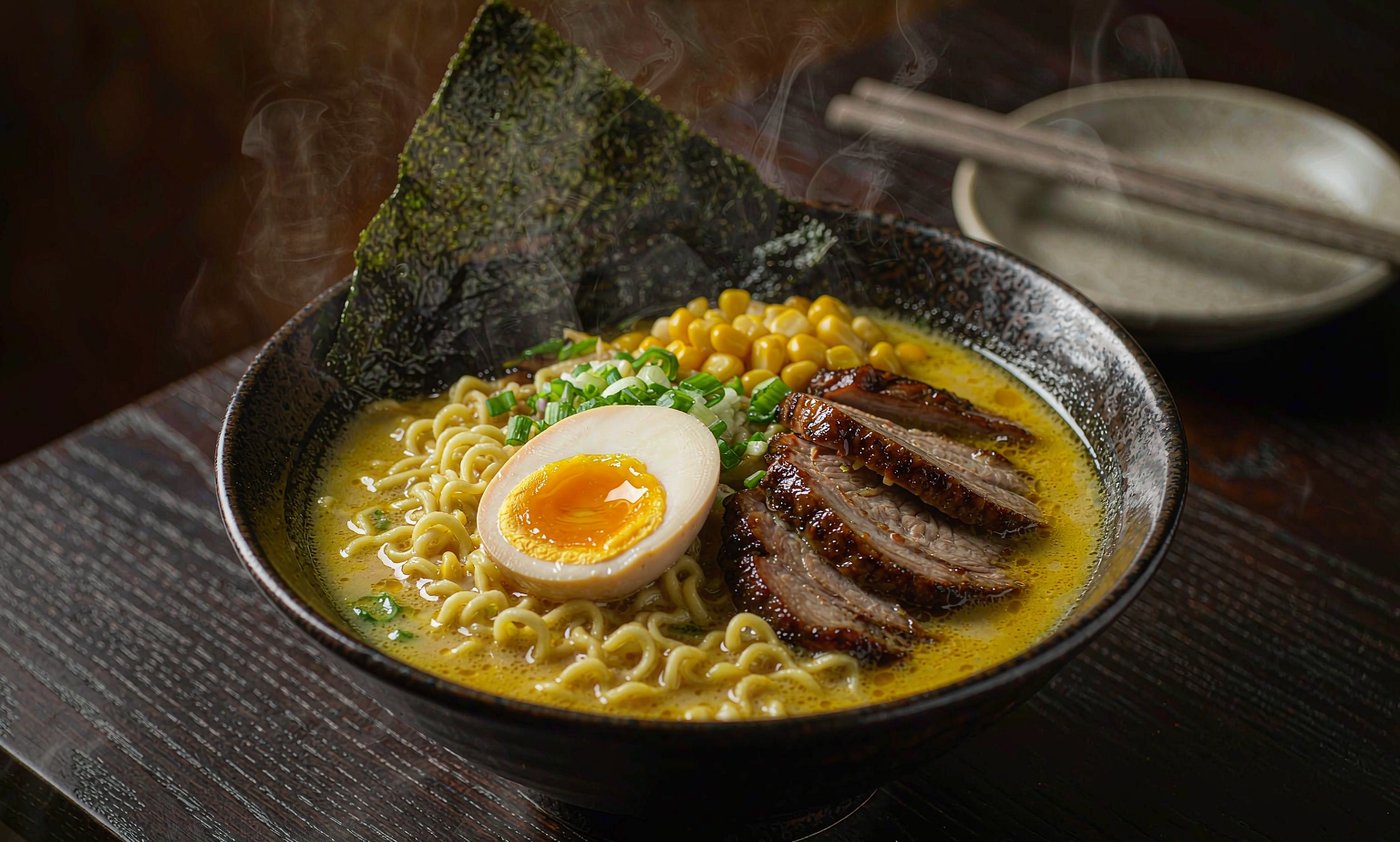
Most ramen recipes ask you to make a broth, cook the noodles separately, then assemble. This one uses a single saucepan: the aromatics go in first, the noodles cook straight in the seasoned broth, and the miso is whisked in after the pot comes off the heat so its aroma survives.
The two things that matter are temperature and restraint. Miso is fermented and full of volatile compounds — boil it and you lose most of what makes it taste like miso. And the noodles keep drinking broth after they leave the pan, so pull them while they still have a little bite.
We tested this three times before publishing — once with red miso, once with white, and once with a gluten-free noodle. All three worked. The notes below tell you what changed each time, and where the recipe will forgive you.
Ingredients
Instructions
Bring the stock to a bare simmer in a medium saucepan with the ginger, garlic and sesame oil. Let it infuse for 5 minutes — you want the surface trembling, never boiling.
Add the noodles and cook them straight in the broth for 2 minutes less than the packet says. They keep softening in the hot liquid after the pan comes off the heat.
Take the pan off the heat and let it sit for 30 seconds. Whisk the miso with a ladleful of the hot broth in a small bowl until smooth, then stir it back into the pan.
Taste and adjust — depending on your miso you may want a splash of soy or a pinch of sugar. Divide between two deep bowls; the broth should be intensely seasoned on its own.
Top with the halved eggs, spring onions and a drizzle of chilli oil. Eat immediately, while the noodles still have bite.
Testing notes & substitutions
Red miso or white?
Red (aka) is saltier, deeper and holds up better against the garlic and sesame. White (shiro) is sweeter and more delicate — if you use it, start with two tablespoons and taste before adding the third.
Making it gluten-free
Use rice or 100% buckwheat noodles and check your miso label — most are made with barley or wheat. Tamari in place of soy works. The noodles cook faster, so start checking at 90 seconds.
If the broth tastes flat
It almost always needs acid or salt, not more miso. A teaspoon of rice vinegar and a pinch of flaky salt will do more than another spoonful of paste, which only makes it muddy.
Questions we get a lot
Can I make it vegetarian?
Yes. Use a good vegetable stock and add a dried shiitake or two while the broth infuses. Skip the egg, or swap in soft-set tofu for protein.
How do I get a jammy egg?
Six and a half minutes in boiling water, then straight into cold water for two minutes. Peel under running water — the shell comes away cleanly.
Can I make the broth ahead?
Make and cool the infused stock up to two days ahead, but add the miso only when you reheat it. Miso keeps its aroma far better in the fridge than in a saucepan.
Dana Reyes
Dana has cooked professionally for eleven years and has been testing recipes for Hearth & Thyme since 2019. She writes about weeknight cooking, slow breads, and the small techniques that quietly change a dish. Every recipe she publishes is cooked at least twice, in an ordinary home oven.
Keep cooking