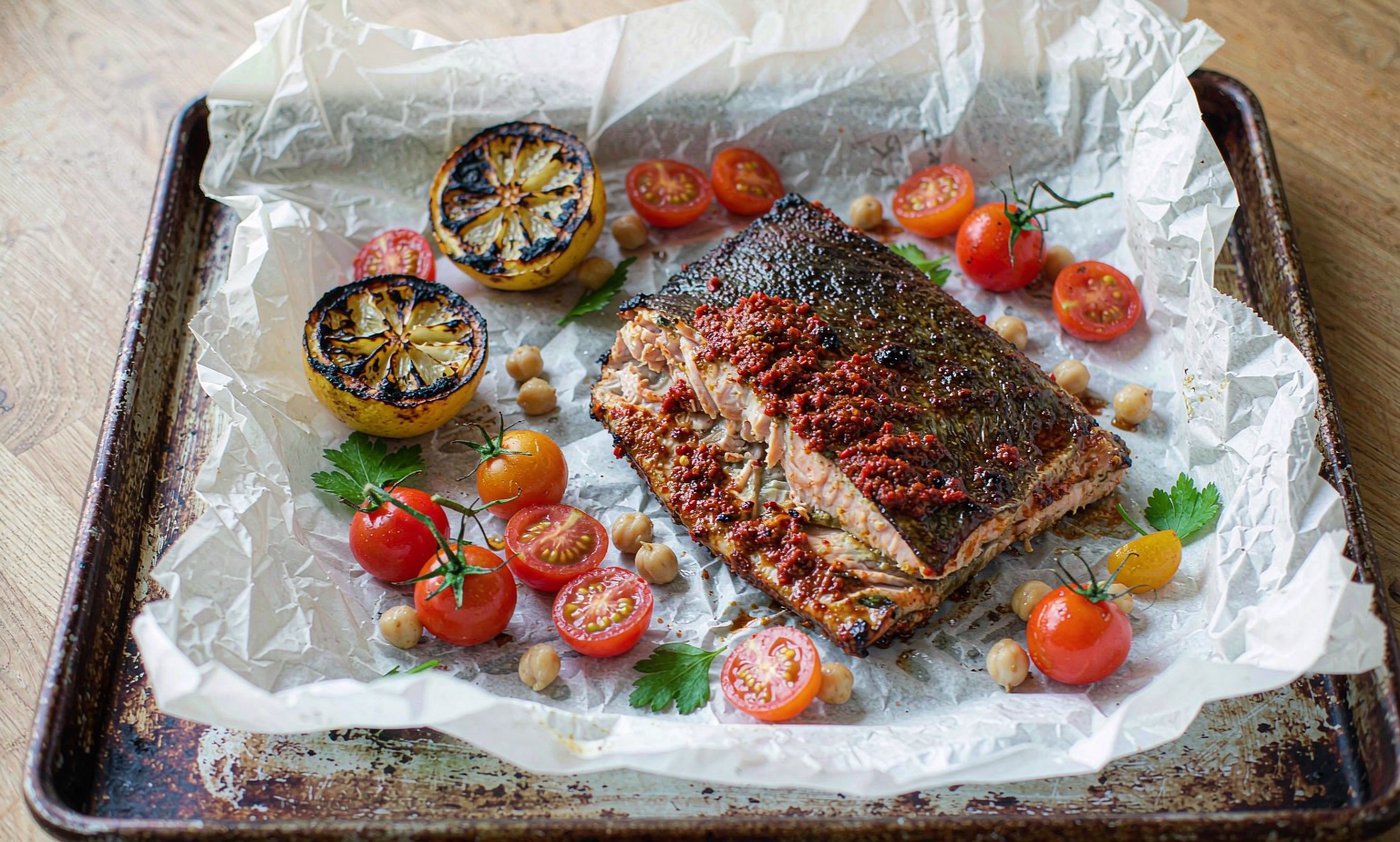
Sheet-Pan Harissa Salmon
This is the fastest thing in the archive to assemble, which is exactly why it is worth getting the details right.
The two-minute tray
This is the fastest thing in the archive to assemble, which is exactly why it is worth getting the details right. Salmon is unforgiving in a hot oven: a two-minute difference at 220°C is the gap between silky and dry, and most sheet-pan recipes lose that battle because the vegetables need longer than the fish does.
So we stagger them. The vegetables go in first and get a head start. The salmon is added later, on top, where it can catch the reflected heat from the tray rather than sitting in it. The result is one tray, one wash-up, and fish that comes out at the right moment.
Rose harissa is worth seeking out for this. It is milder and more floral than the standard version, and the petals keep the glaze from reading as purely hot. A standard harissa works too, but drop the quantity to a heaped tablespoon.
Ingredients
Instructions
Heat the oven to 220°C fan and put a large, shallow baking tray on the middle shelf while it comes to temperature. A preheated tray is what gives the chickpeas their crisp edges.
In a small bowl, mix the harissa, olive oil, honey and a good squeeze of lemon juice into a loose paste.
Toss the chickpeas, garlic and lemon slices with a pinch of salt and a tablespoon of the harissa paste, then spread them over the hot tray in one layer and roast for 12 minutes.
Turn the oven down to 200°C. Push the chickpeas to one end of the tray and add the broccoli and tomatoes to the other end, keeping everything in a single layer.
Pat the salmon dry, set the fillets on top of the vegetables skin-side up, and spoon the remaining harissa paste over the flesh only, leaving the skin clean so it stays crisp.
Roast for 9 to 11 minutes, until the salmon is just opaque at the thickest point and the glaze has darkened at the edges. If your fillets are thick, check at 9 minutes and go by feel rather than the clock.
Serve straight from the tray with a spoonful of yoghurt and a scatter of dill, squeezing over the roasted lemon.
Testing notes & substitutions
Buy the thickest fillets you can
Thin tail pieces cook in six minutes and dry out instantly. Ask for centre-cut fillets; they are more forgiving and hold a glaze better.
Preheating the tray is the whole technique
A cold tray steams the chickpeas and leaves the broccoli floppy. If your tray is not preheated, add six minutes to the first stage.
Watch the tomatoes
Vine tomatoes burst and release a lot of water, which can wash the glaze off the salmon. If yours are large, halve them and add them with the salmon rather than before it.
Questions we get a lot
Can I use frozen salmon?
Thaw it completely overnight in the fridge and pat it very dry. Frozen fillets carry far more surface water, which stops the glaze from catching.
How do I know when it is done?
The flesh should flake under light pressure but still look glossy in the centre. A probe thermometer reading 50 to 52°C at the thickest point will give you a slightly translucent centre — carry-over heat finishes the job.
Can I make this for four?
Use two trays rather than crowding one. Divide the vegetables between them and roast in the same oven, swapping the shelves halfway.
Dana Reyes
Dana has cooked professionally for eleven years and has been testing recipes for Hearth & Thyme since 2019. She writes about weeknight cooking, slow breads, and the small techniques that quietly change a dish. Every recipe she publishes is cooked at least twice, in an ordinary home oven.
Keep cooking
More weeknight dinners
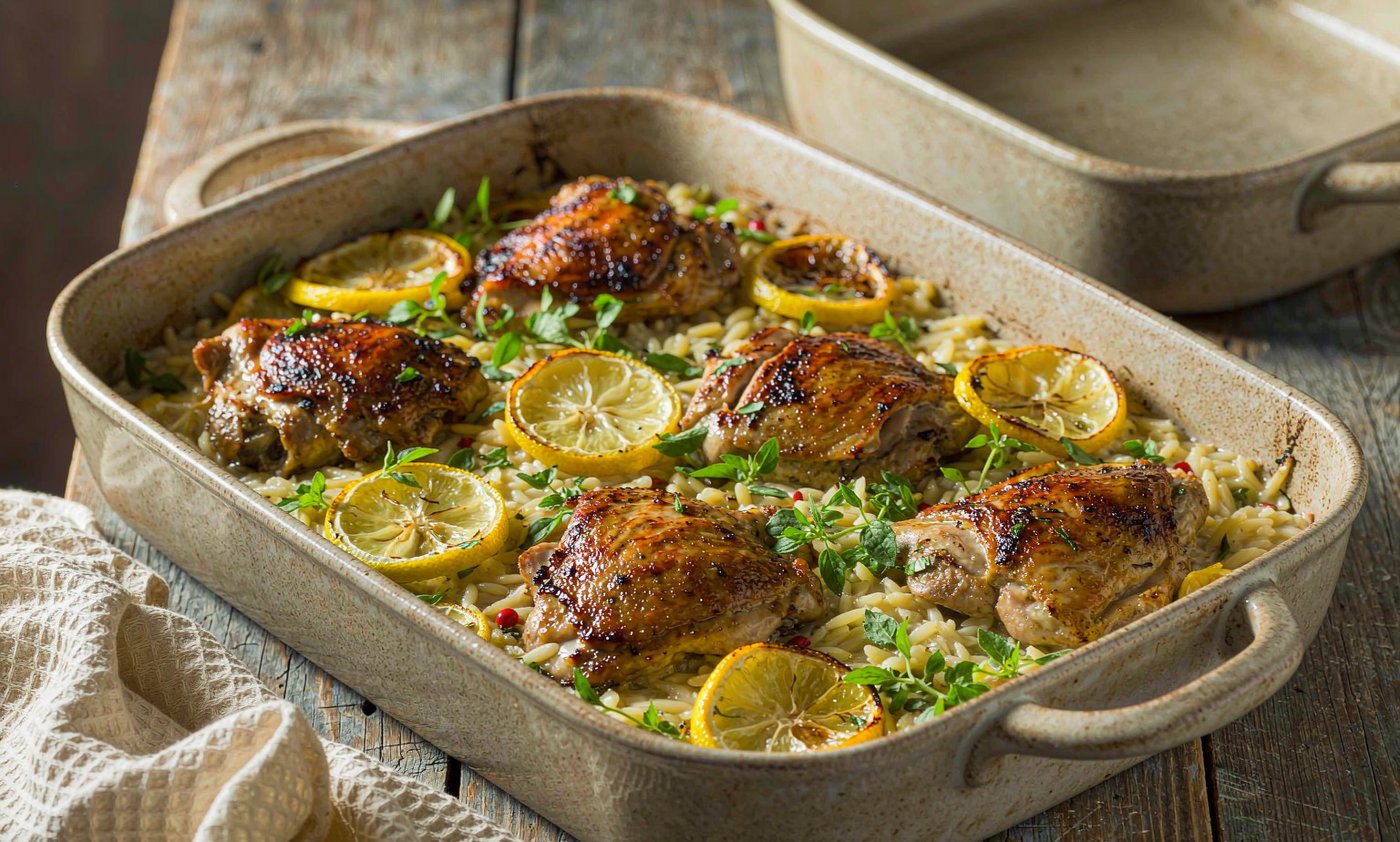
One-Pan Lemon Chicken & Orzo
Sticky Ginger Chicken Thighs