Dutch Baby Pancake
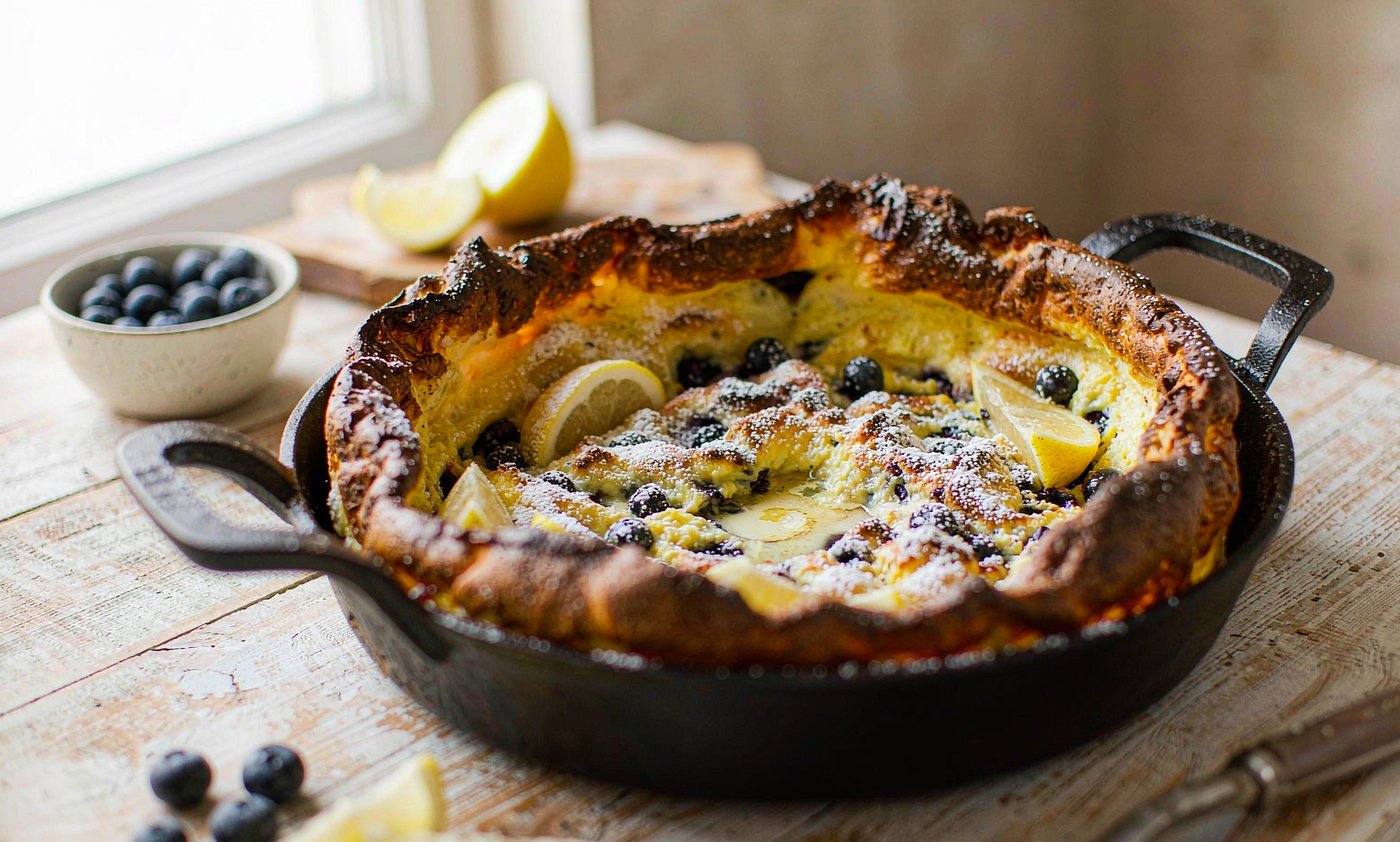
A Dutch baby rises in a hot oven because the liquid batter steams and sets into a tall, dramatic puff.
Why the oven needs to be hot
A Dutch baby rises in a hot oven because the liquid batter steams and sets into a tall, dramatic puff. A cold oven or cold pan gives you a flat pancake.
The batter is thin, like crêpe batter, and relies on eggs for structure. Resting it for 10 minutes lets the flour hydrate fully.
Ingredients
Instructions
Preheat the oven to 220°C. Place a 20 cm ovenproof frying pan or cast-iron skillet inside to heat.
Whisk the eggs, milk, flour, sugar, vanilla and salt together until smooth. Leave to rest for 10 minutes.
Carefully remove the hot pan from the oven and add the butter. Swirl until melted and foaming.
Pour the batter into the pan and immediately return to the oven. Bake for 18-20 minutes until dramatically puffed and golden.
Serve straight from the pan with berries and maple syrup.
Testing notes & substitutions
It will deflate
Dutch babies always fall once they leave the oven. That is normal and expected.
Sweet or savoury
This same batter works with grated cheese and herbs for a savoury version.
Resting the batter
Do not skip this step. It gives the pancake its custardy texture and prevents a floury taste.
Questions we get a lot
Can I double the recipe?
Use a larger pan, around 25 cm, and add a few minutes to the baking time.
Why did mine not puff?
The oven or pan was not hot enough, or the batter was over-mixed. Whisk until just smooth.
Can I use a cake tin?
Yes — a 20 cm round cake tin works if you do not have an ovenproof pan.
Dana Reyes
Dana has cooked professionally for eleven years and has been testing recipes for Hearth & Thyme since 2019. She writes about weeknight cooking, slow breads, and the small techniques that quietly change a dish. Every recipe she publishes is cooked at least twice, in an ordinary home oven.
Keep cooking
More brunch & breakfast
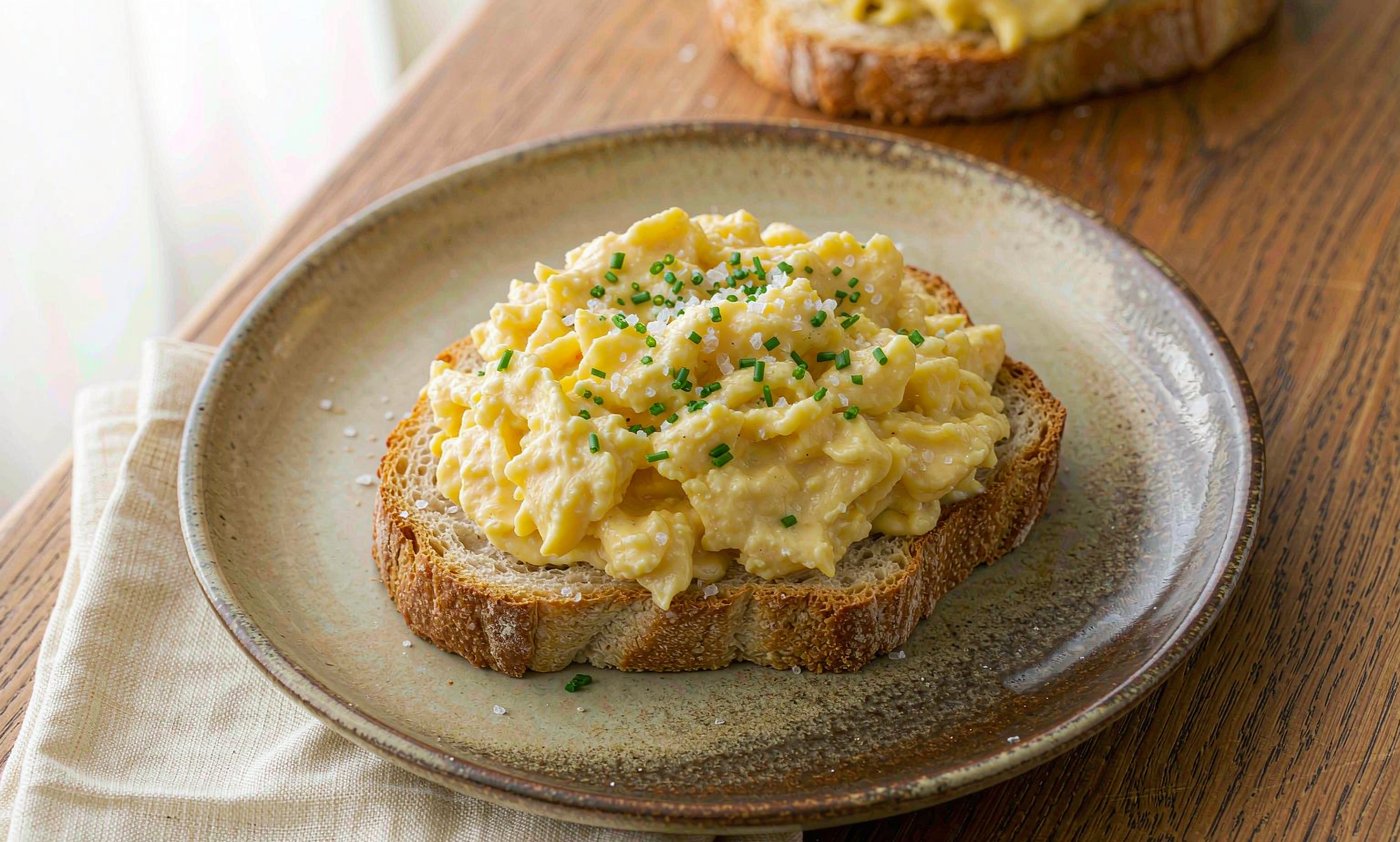
Soft Scrambled Eggs on Sourdough
Lemon Ricotta Pancakes