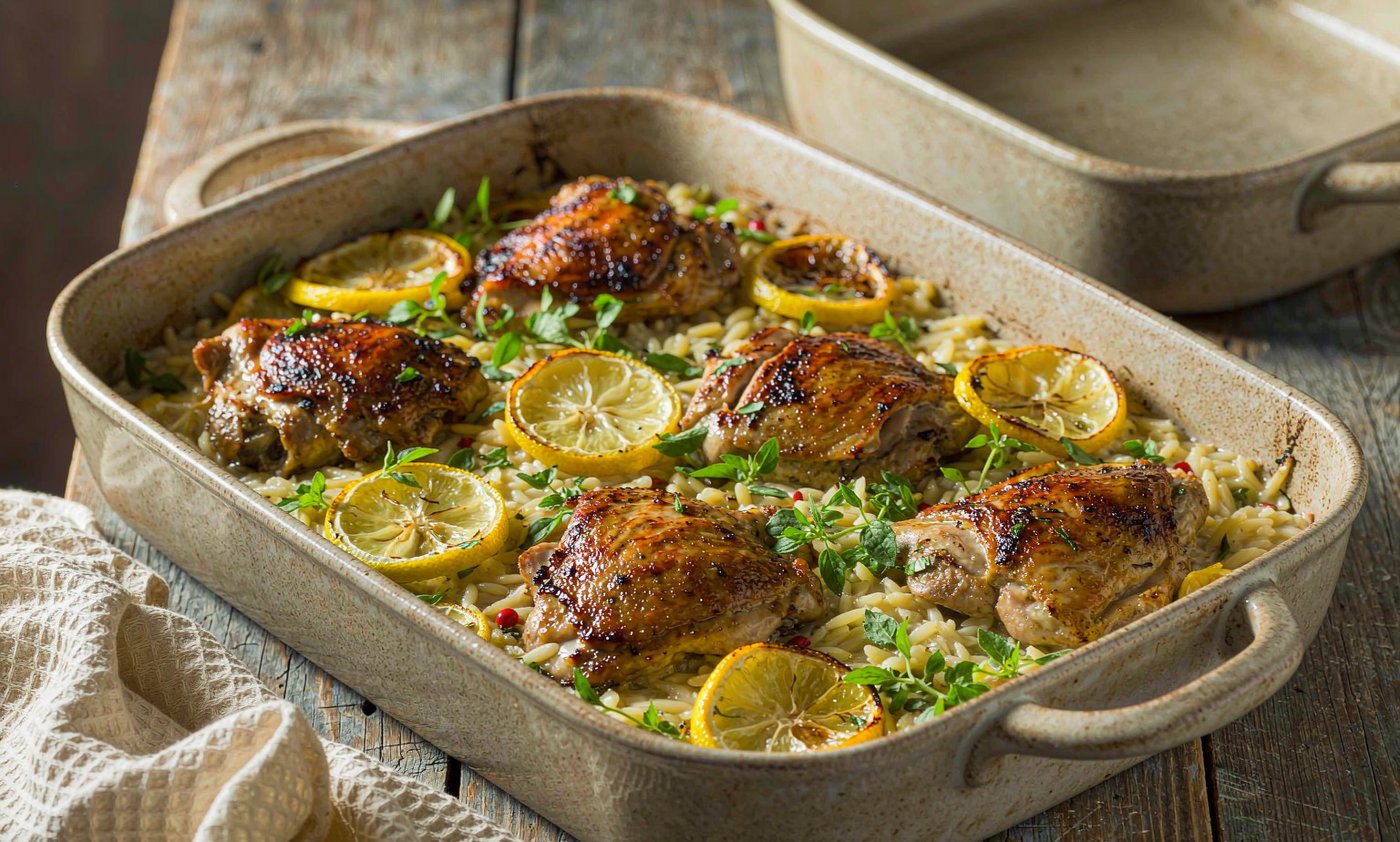
One-Pan Lemon Chicken & Orzo
Most one-pan chicken recipes ask you to brown the meat, lift it out, cook the starch, then add the meat back.

Why this one earned a permanent spot
Most one-pan chicken recipes ask you to brown the meat, lift it out, cook the starch, then add the meat back. This one skips the round trip entirely: the thighs go in skin-side down and stay there, so the fat renders exactly where the orzo will end up cooking.
The technique that makes it work is nesting the pasta in the rendered fat and adding only enough stock to cover it by a finger's width. Too much liquid and you have soup; too little and the orzo catches on the base of the pan. If you can measure stock into a jug, you can make this.
We tested it three times before publishing — once with bone-in thighs, once boneless, and once with a gluten-free orzo. All three worked. The notes further down tell you exactly what changed each time, and where the recipe will forgive you.
Ingredients
Instructions
Heat the oven to 200°C / 400°F. Pat the chicken thighs completely dry and season both sides generously with salt and pepper — a dry surface is what gives you crackling skin at the end.
Set a 12-inch oven-safe pan over medium-high heat with the olive oil. Lay the thighs in skin-side down and leave them alone for about 7 minutes, until the skin lifts away easily and is deep golden brown.
Turn the thighs over, add the shallot and garlic, and cook for 2 minutes until fragrant. Tip in the orzo and stir for a full minute so every grain is coated in the pan fat before any liquid goes in.
Pour in the warm stock and add the lemon zest. Nestle the thighs back on top, skin-side up, and move the pan to the oven for 15 minutes — the orzo should be just al dente with the liquid almost fully absorbed.
Take the pan out, scatter the spinach and parmesan over the top and dot with the cold butter. Squeeze over the lemon juice, rest for 3 minutes, then serve straight from the pan with plenty of black pepper.
Testing notes & substitutions
Bone-in or boneless?
Both work, and neither is a compromise. Bone-in gives you more flavour and a wider window on timing. Boneless thighs need four fewer minutes in the oven — check at eleven minutes and trust the texture of the orzo, not the clock.
Swapping in gluten-free orzo
It works, but the starch behaves differently. Add two extra tablespoons of stock, pull the pan out three minutes early, then let it sit covered for five minutes before serving — gluten-free pasta keeps softening after it leaves the heat.
If the orzo is still soupy
Put the pan back on the hob over medium heat for two minutes and stir constantly. If the opposite has happened and the orzo has caught on the base, add a splash of stock off the heat — it will loosen straight away.
Questions we get a lot
Can I use chicken breasts instead of thighs?
You can, but you lose the crisp skin and the dish becomes far less forgiving. If you do swap, use skin-on breasts, cut the oven time to 12 minutes, and check that the orzo isn't drying out underneath.
What if my pan isn't oven-safe?
Cook the thighs and aromatics in whatever pan you have, then move everything into a baking dish before the stock goes in. Add three minutes to the oven time, because the dish will start cold.
How long do the leftovers keep?
Three days in the fridge in a sealed container. Reheat in a covered pan over low heat with a spoonful of stock. A microwave works too, though it softens the skin noticeably.
Dana Reyes
Dana has cooked professionally for eleven years and has been testing recipes for Hearth & Thyme since 2019. She writes about weeknight cooking, slow breads, and the small techniques that quietly change a dish. Every recipe she publishes is cooked at least twice, in an ordinary home oven.
Keep cooking
More weeknight dinners to try
Sticky Ginger Chicken Thighs
Creamy Tuscan Butter Beans