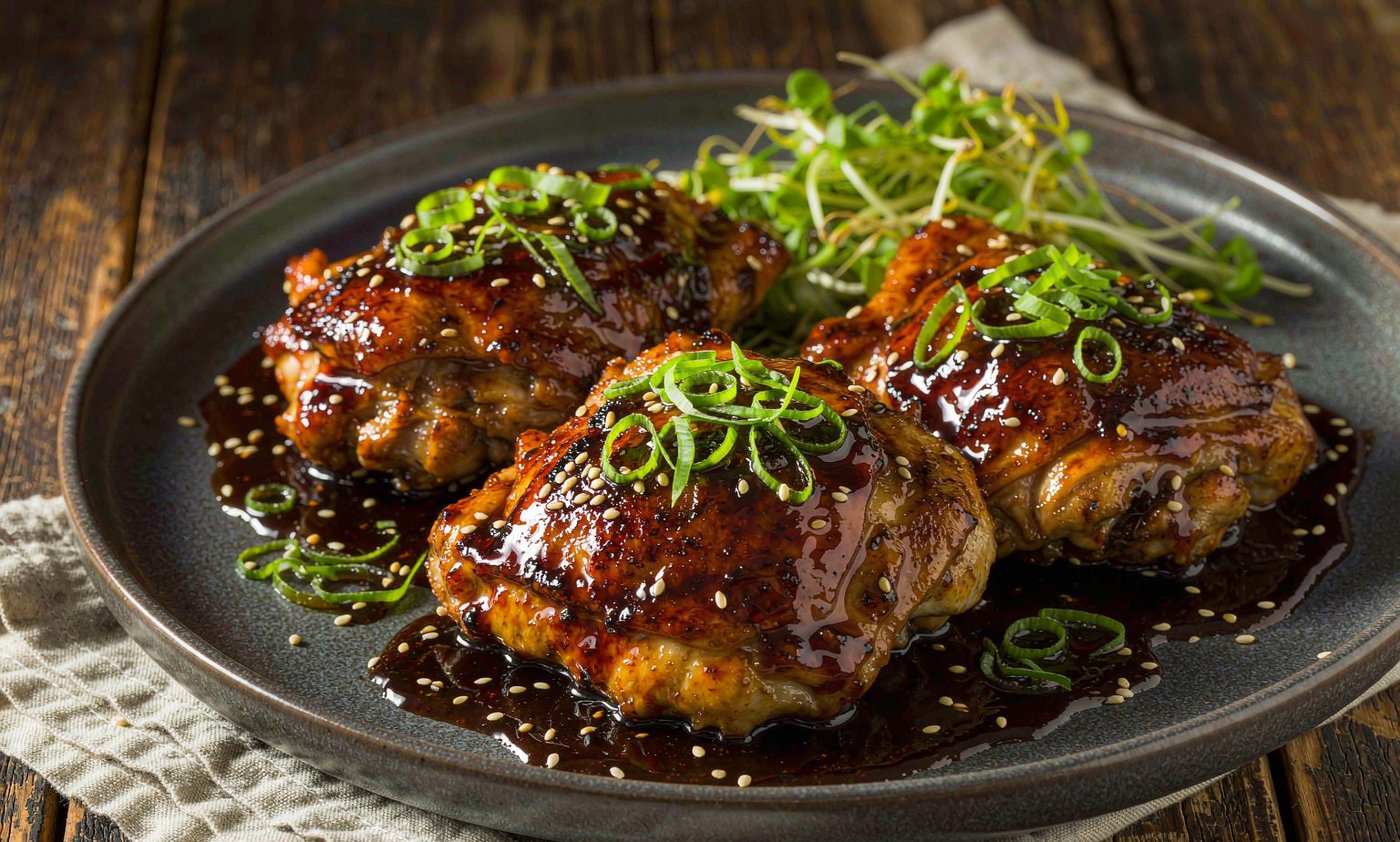
Sticky Ginger Chicken Thighs
A sticky chicken glaze is sugar plus something savoury, and sugar plus a hot pan equals bitterness if you get the order wrong.
Why the glaze goes on late
A sticky chicken glaze is sugar plus something savoury, and sugar plus a hot pan equals bitterness if you get the order wrong. So we do the whole thing backwards from instinct: the thighs go in dry, skin down, and nothing sweet touches them until the last two minutes.
That first stretch is doing real work. Rendering the skin slowly over medium heat gives you the fat you need to cook the aromatics, and it gives the chicken a head start so the glaze has something to grip. By the time the honey and soy go in, the meat is already cooked through and the pan is already glossy.
The payoff is texture. The glaze reduces to a thin lacquer that stays put instead of sliding off, and the ginger keeps it from tipping into candy. If you want it hotter, add the chilli with the aromatics rather than at the end — it needs a minute in the fat to stop tasting raw.
Ingredients
Instructions
Pat the thighs completely dry with kitchen paper and salt them on both sides. Wet skin will steam instead of crisp, and no amount of heat later will fix it.
Set a large frying pan over medium heat and lay the thighs in skin-side down, without crowding them. Cook undisturbed for 9 to 11 minutes, until the skin is deep gold and has released most of its fat. Press the thighs flat with a spatula for the first thirty seconds if the skin curls.
Turn the thighs and cook for 4 minutes more, then lift them onto a plate. Tip out all but 2 tablespoons of the rendered fat and save it — it is excellent for roast potatoes.
Add the ginger and garlic to the pan over medium-low heat. Stir for 60 to 90 seconds until fragrant and just starting to colour at the edges. Do not let the garlic go brown or the whole glaze will taste sharp.
Pour in the soy sauce, honey and rice vinegar. Let it bubble for a minute, scraping the base of the pan, until it thickens enough to coat the back of a spoon.
Return the thighs skin-side up, spoon the glaze over them, and cook for 2 minutes so the sauce clings and the skin re-glazes. Off the heat, stir in the sesame oil.
Scatter over the spring onions and sesame seeds and serve straight from the pan, with steamed rice and something sharp alongside.
Testing notes & substitutions
You can use skinless thighs
They will cook faster and the sauce will be looser, because you lose the rendered fat that thickens it. Add an extra teaspoon of honey and shorten the first stage to 6 minutes.
The glaze scales badly
Doubling the sauce in the same pan gives you a watery result rather than twice as much lacquer. Cook the chicken in two batches, then make the glaze in a clean pan and pour it over everything at the end.
Leftovers are genuinely good cold
Shred the meat off the bone, fold it through the cold glaze, and use it in a sandwich the next day. It keeps three days in the fridge.
Questions we get a lot
Can I make this with chicken breasts?
Yes, but use skin-on breasts and adjust the timing hard: 6 minutes skin-side down, 3 minutes on the second side. Breasts go from juicy to chalky in about 90 seconds, so pull them at 68°C and let them rest.
My glaze turned dark and bitter — what happened?
Almost always the honey went in too early, or the pan was hotter than medium. Sugar scorches in seconds at high heat. If it has already happened, add a splash of water off the heat to stop the cooking, then taste and dilute with a little more soy.
Is there a substitute for rice vinegar?
White wine vinegar or cider vinegar both work at the same quantity. Lemon juice is too aggressive here — it flattens the ginger.
Dana Reyes
Dana has cooked professionally for eleven years and has been testing recipes for Hearth & Thyme since 2019. She writes about weeknight cooking, slow breads, and the small techniques that quietly change a dish. Every recipe she publishes is cooked at least twice, in an ordinary home oven.
Keep cooking
More weeknight dinners
One-Pan Lemon Chicken & Orzo
Crispy Gnocchi with Peas