Everyday Sourdough Boule
Most sourdough instructions assume you can be in the kitchen at specific hours, which is why so many starters end up neglected in the back of a fridge.
A schedule for people who have jobs
Most sourdough instructions assume you can be in the kitchen at specific hours, which is why so many starters end up neglected in the back of a fridge. This version is built around a long cold retard instead: you mix in the evening, do two folds, and bake the following evening whenever suits you.
It is deliberately forgiving. A boule that spends eighteen hours in the fridge instead of twelve will still be excellent, and probably better — cold, slow fermentation gives you a more open crumb and a more sour crust.
The Dutch oven is doing real work here. A domestic oven cannot inject steam, and without steam the crust sets before the dough has finished expanding. A lidded pot traps the water already inside the dough and holds it around the loaf for the first twenty minutes.
Ingredients
Instructions
Mix the two flours and 350 g of water in a large bowl until no dry flour remains. Cover and leave to rest for 45 minutes — this autolyse hydrates the flour and makes the dough far easier to handle later.
Add the starter and work it in with wet hands, squeezing and folding until it is fully incorporated. Rest for 20 minutes.
Dissolve the salt in the extra 25 g of water and work that through the dough the same way. The dough will slacken noticeably; it will tighten again as you fold it.
Over the next 2 hours, do four sets of stretch-and-folds, 30 minutes apart. Wet your hand, lift one side of the dough, stretch it upward and fold it over the centre. Repeat on all four sides. You should feel it gaining strength each round.
Leave the dough to bulk ferment at room temperature for a further 1 to 2 hours, until it has grown by about 60% and looks domed and bubbly at the edges.
Flour your work surface lightly, turn the dough out, and shape it into a tight round by folding the edges towards the centre, then dragging it across the bench to build tension on the base. Rest seam-side up for 20 minutes.
Shape once more, then place seam-side up in a well-floured banneton. Cover and refrigerate for 12 to 18 hours.
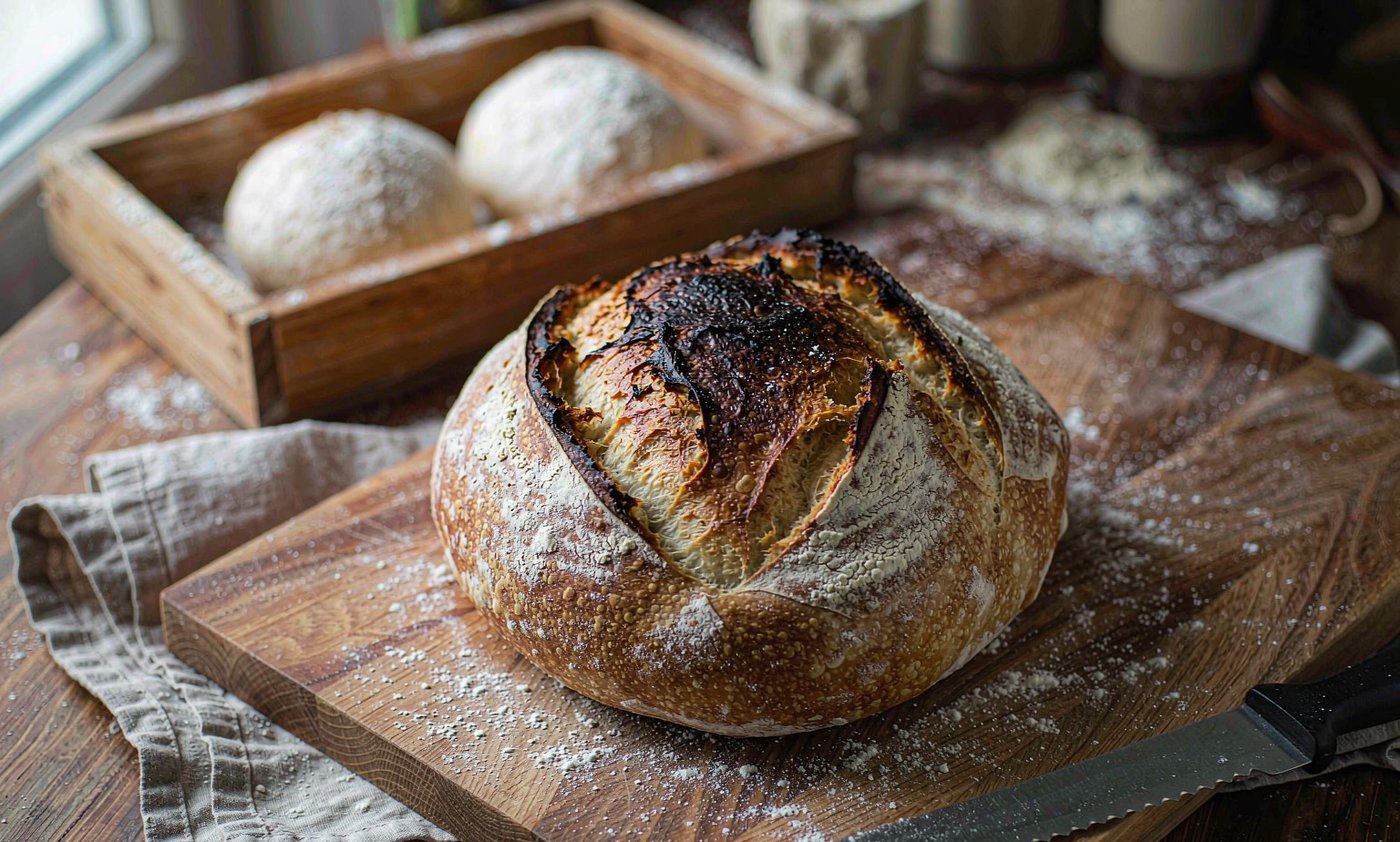
Heat the oven to 250°C fan with a Dutch oven inside for at least 45 minutes. Turn the cold dough out onto a piece of baking paper, score the top decisively with a blade held at 30 degrees, and lower it into the hot pot.
Bake covered for 20 minutes, then uncover, drop to 220°C, and bake for a further 22 to 25 minutes, until the crust is dark brown and the loaf sounds hollow when tapped on the base.
Cool completely on a wire rack for at least 2 hours before cutting. Cutting warm bread ruins the crumb you spent a day building.
Testing notes & substitutions
Your starter's schedule is not yours
A starter that peaks in four hours behaves differently from one that takes eight. Use the dough's appearance, not the clock: you are looking for a 60% rise and a domed top.
Wet dough is not a failure
This is a 78% hydration dough and it will feel sticky for the first hour. The folds tighten it. Resist adding flour, which makes the crumb dense.
Score deeper than feels right
A shallow score does not give the loaf anywhere to open, so it tears at the side. You want a cut about 1.5 cm deep, made with confidence.
Questions we get a lot
Do I really need a Dutch oven?
It helps a great deal, but a heavy casserole with a lid, or even an upturned metal bowl over a baking stone, will do the same job. What you cannot skip is the trapped steam.
My loaf is gummy in the middle — why?
Either it was cut too soon, or the bulk ferment was too short. Under-fermented dough bakes up tight and dense, and the crumb never sets properly.
Can I use all white flour?
Yes, and you will get a lighter, more open crumb. Wholemeal brings flavour and a slightly denser texture; the 90/10 split is a reasonable compromise.
Dana Reyes
Dana has cooked professionally for eleven years and has been testing recipes for Hearth & Thyme since 2019. She writes about weeknight cooking, slow breads, and the small techniques that quietly change a dish. Every recipe she publishes is cooked at least twice, in an ordinary home oven.
Keep cooking
More baking & breads
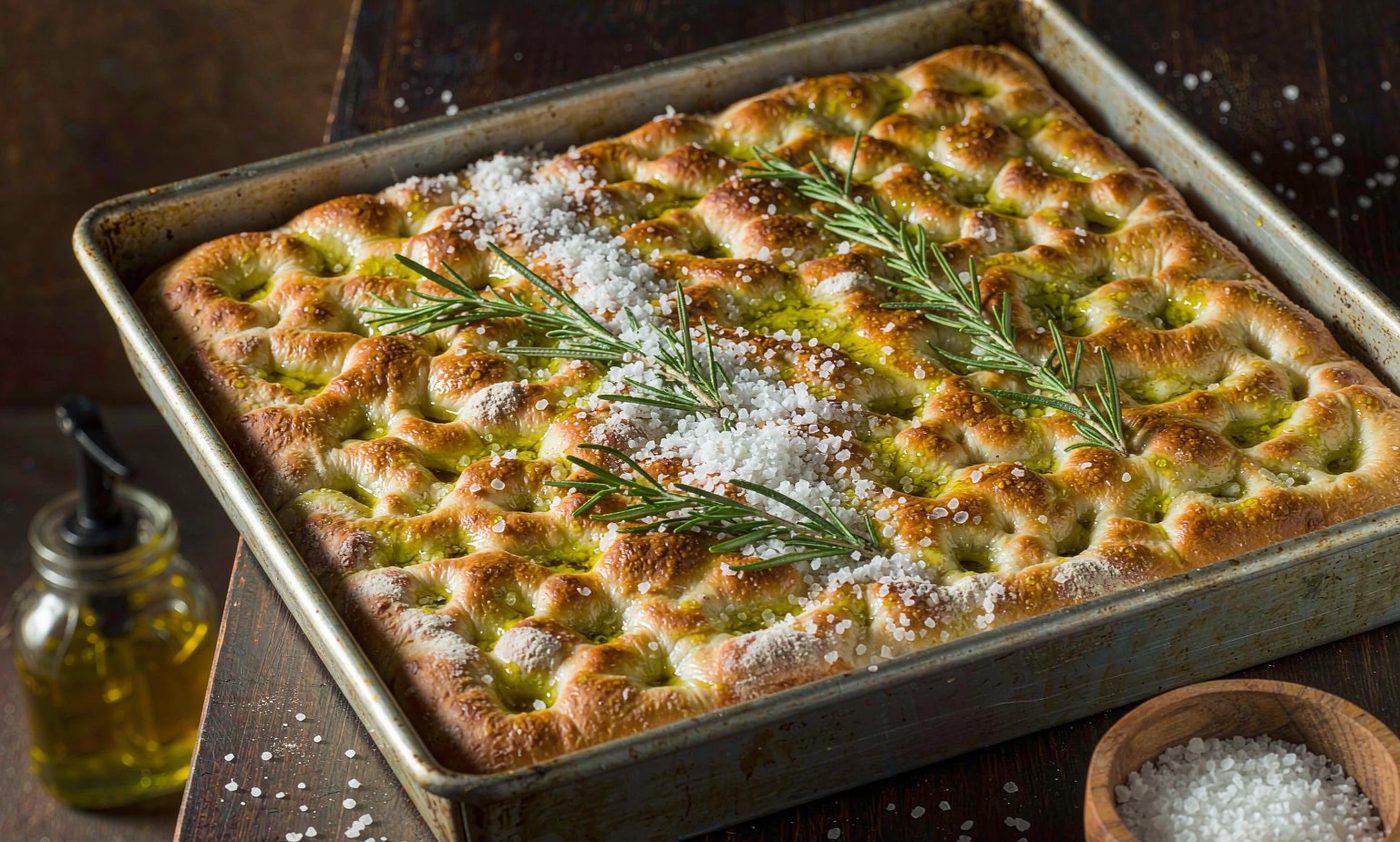
Overnight No-Knead Focaccia
Butter Skillet Cornbread